

Rare Disease Hackathon India 2026
Undiagnosed Hackathon India 2026 Brings Global Experts Together to End the Diagnostic Odyssey for Rare Disease Families
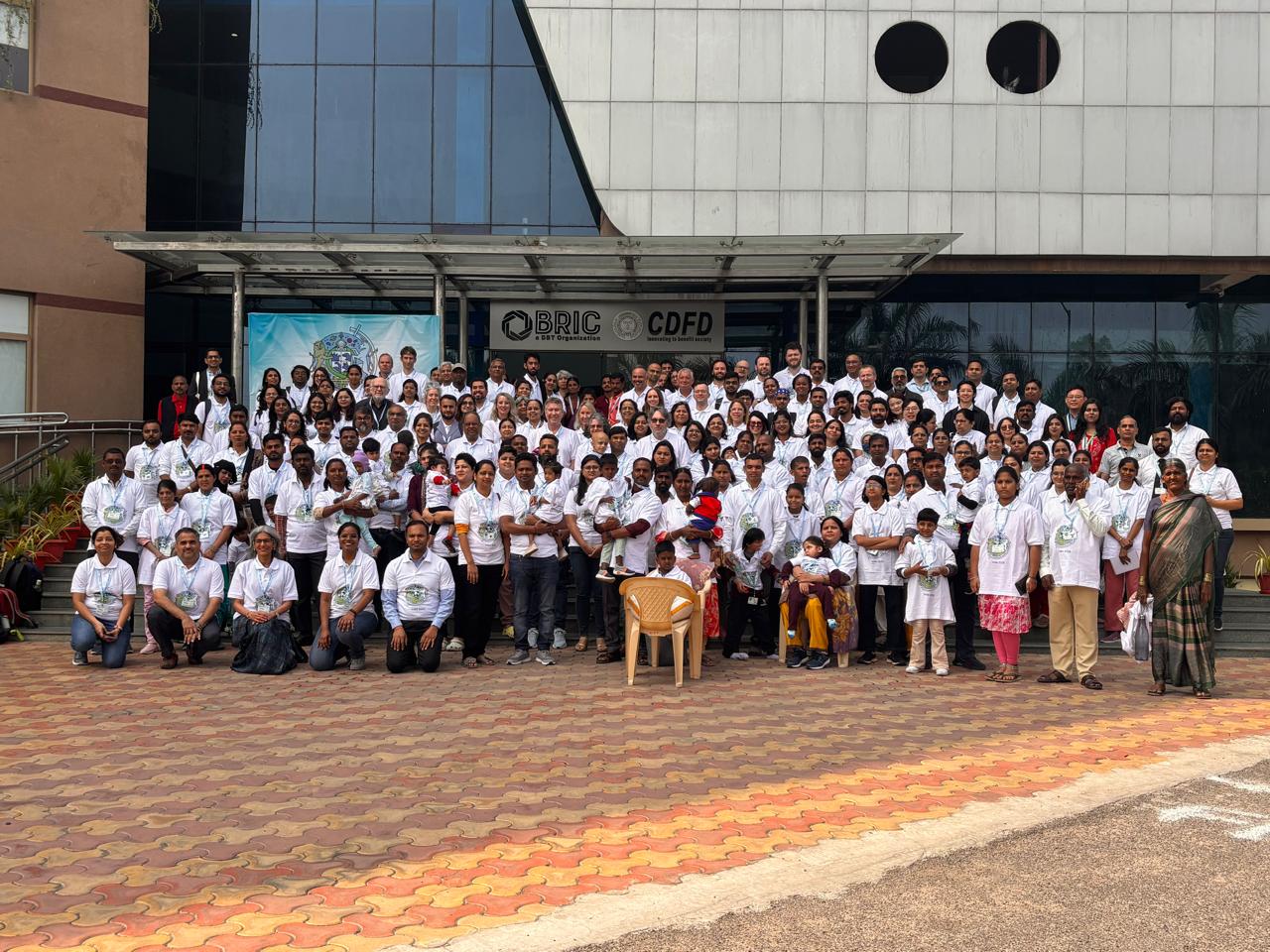
Hyderabad, Feb 2026—The Undiagnosed Hackathon India 2026 convened clinicians, genomic scientists, data analysts, and patient advocates from across the world with a single mission: to help families whose children suffer from rare, undiagnosed conditions finally find answers.
The hackathon was organized jointly by BRIC-CDFD, in collaboration with AVPN, Sir Ganga Ram Hospital, IAMG, and the Wilhelm Foundation.
This year’s event brought together over 100 experts and welcomed 25 families—the highest participation so far. Many families traveled long distances to join this unique effort.
At the heart of the initiative are parents who have personally experienced the devastating uncertainty of undiagnosed disease. Several of their own children passed away without ever receiving a diagnosis.
“When your child has no diagnosis, you are left behind by healthcare systems, by schools, and even by society. No one knows what is wrong. There is no treatment. You don’t know whether what you try will help or make things worse. You are completely alone,” shared one of the founders.
Without a diagnosis, families live in constant uncertainty, unable to explain their child’s condition to teachers, relatives, or even doctors. Unlike well-known illnesses such as cancer or diabetes, undiagnosed conditions have no name, no clear pathway, and often no community for support.
Currently, even with advanced clinical tools, only about 40% of rare disease cases receive a definitive diagnosis. #RareDiseases often trigger a grueling diagnostic odyssey, sometimes lasting 10+ years, for families desperately seeking answers.
The Hackathon changes this by bringing together a global “nerd herd” of specialists who analyze each child’s genome—over 3 billion DNA letters—and match genetic findings with clinical symptoms. Experts from different countries collaborate in real time, comparing cases worldwide to identify rare variants and potential causes.
“A child in India may have the same genetic change as a child in Sweden or Australia. Diversity is our strength. That’s why we need global collaboration,” said one of the organizers.
Importantly, a diagnosis—whether or not a treatment exists—can transform a family’s journey. It helps rule out worst-case scenarios, removes misplaced guilt, opens doors to clinical trials, connects families with others facing the same condition, and provides much-needed emotional relief.
During this year’s Hackathon, several cases were already diagnosed, with many representing the first known instances in India of specific rare genetic conditions. While these disorders are not unique to India, identifying them locally enables better care pathways and paves the way for helping many more families in the future.
“We were thrilled to contribute long-read HiFi sequencing data from 25 trios (parents + child) to the BRIC-CDFD Hackathon,” said Dushyant Singh Baghel, Founder and CEO of Nucleome Informatics and Bioeconomy Task Force Member at the Government of Madhya Pradesh. “Incredibly, participants solved 7 cases in just 48 hours, with several more resolved post-event! We would like to thank CDFD and the PacBio team for their support. This showcases the transformative power of multiomics in rare disease diagnosis. Early detection via tools like these could unlock life-changing therapies for so many.” Nucleome Informatics Pvt Ltd
Beyond patient care, the Hackathon also serves as a major capacity-building platform. International experts are training Indian clinicians and researchers in advanced genomic data analysis techniques, ensuring long-term impact.
“It’s not enough to generate data. We must know how to interpret it. This training component is essential,” noted the scientific team.
The Undiagnosed Hackathon India 2026 stands as a powerful example of how compassion, science, and collaboration can come together to restore hope—transforming isolation into community, and uncertainty into understanding.
Sorry, the comment form is closed at this time.